From 2020 through 2025, I kept returning to Inktober: a daily prompt, an ink drawing, and another square in the grid. Looking at the six collection sheets together now feels different from looking at any one drawing. The individual ideas still matter, but the larger story is about returning to the same creative constraint year after year.
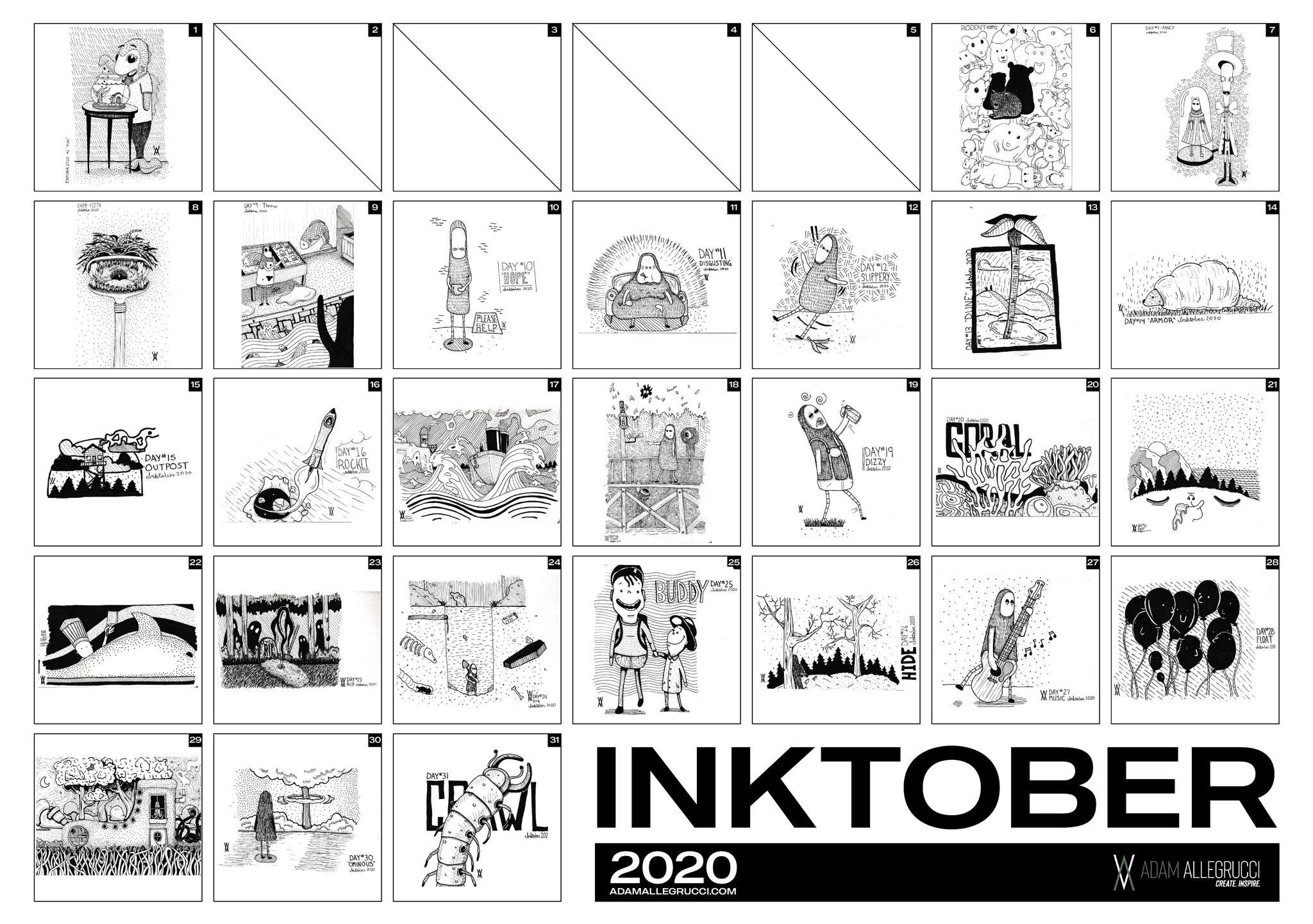
The record is not perfectly tidy. The 2020 sheet has four blank panels near the beginning. The final panel in 2023 is blank too. I do not want to invent a reason for those gaps years later or pretend every October went exactly the same way. What matters to me is that the gaps did not become an ending. I came back.
A repeated constraint becomes a measuring stick
Inktober provides a small brief every day. The prompt narrows the problem, ink limits the visual language, and the calendar creates a finish line. Within those boundaries, almost anything can happen: a character, a visual pun, a strange object, a quiet landscape, or a full scene built around one word.
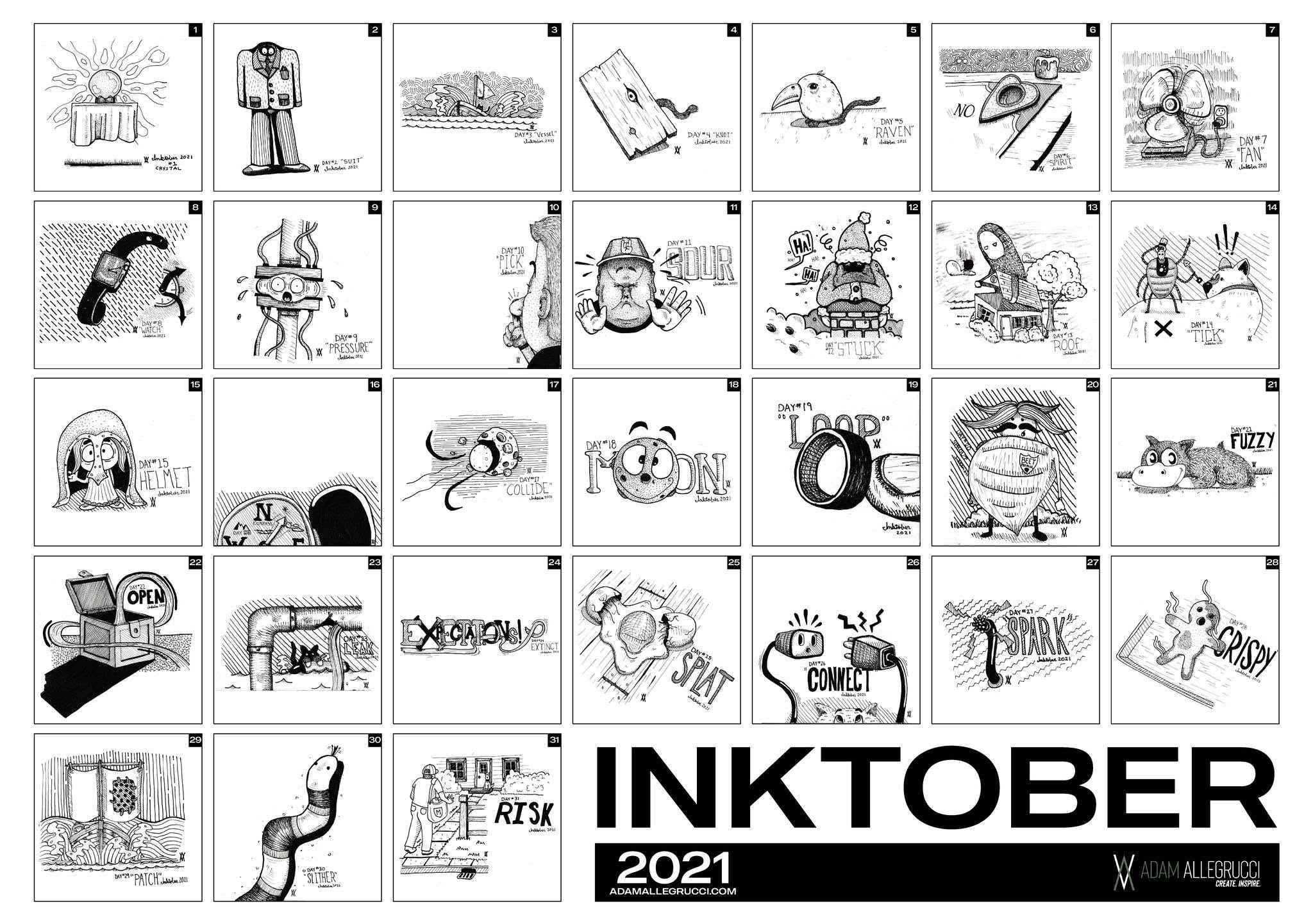
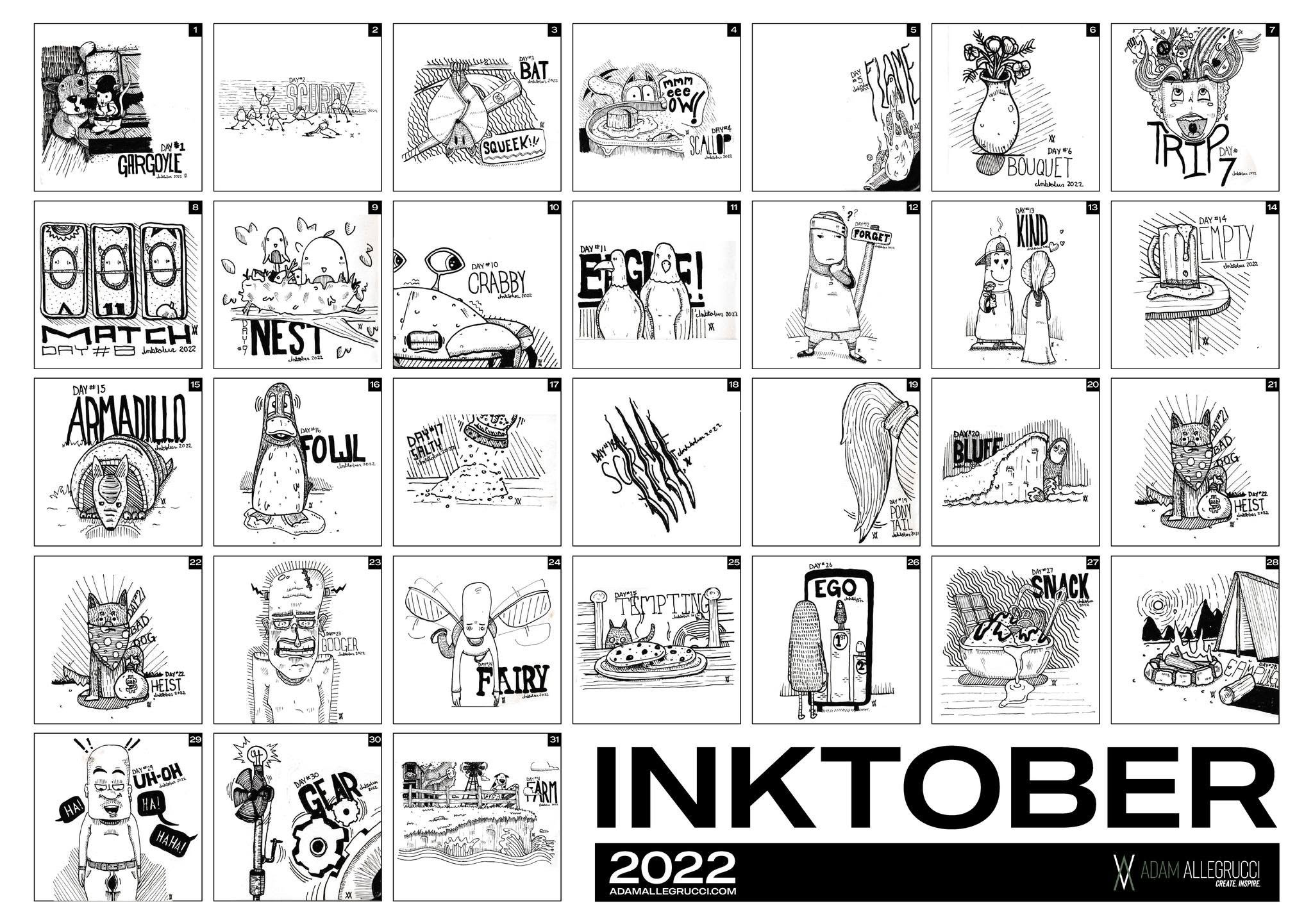
That repeated structure makes the changes easier to see. This is my interpretation of the finished sheets, not a claim that every choice was planned. In 2020, the ideas move between detailed scenes and compact characters. By 2021 and 2022, lettering becomes more integrated into the drawings, and expressive characters carry more of the humor. The 2023 sheet often uses more open space and a direct visual read. In 2024 and 2025, more environments and denser compositions appear alongside the smaller character moments. The 2025 page also brings in selective color.
The prompt stays small. The accumulated practice is what gets big.
Finishing is a creative skill
In a recent public post about returning to detailed ink work, I wrote that creativity is not just about ideas. It is about showing up and finishing. These Inktober sheets make that thought visible. A good idea on day one is useful. A body of work asks for another kind of discipline: making the next decision when the first rush of inspiration is gone.
Finishing does not mean every drawing becomes a favorite. It means giving the prompt a real answer, learning something from it, and moving forward. The grid removes some of the pressure to make one image carry everything. Tomorrow provides another square and another chance to approach the problem differently.
Play keeps the practice alive
Across the six years, certain instincts keep returning. There are animals, odd little creatures, visual jokes, hand-drawn type, and ordinary objects pushed into something less ordinary. Some prompts become scenes. Others work because one simple shape communicates the idea immediately.
That variation is part of why a constraint can stay useful. The rule remains consistent, but the response does not have to. One day can focus on texture, the next on composition, the next on character acting, and the next on finding the fastest clear idea. It is structured practice without turning the work into repetition.
The complete visual record
2020–2025
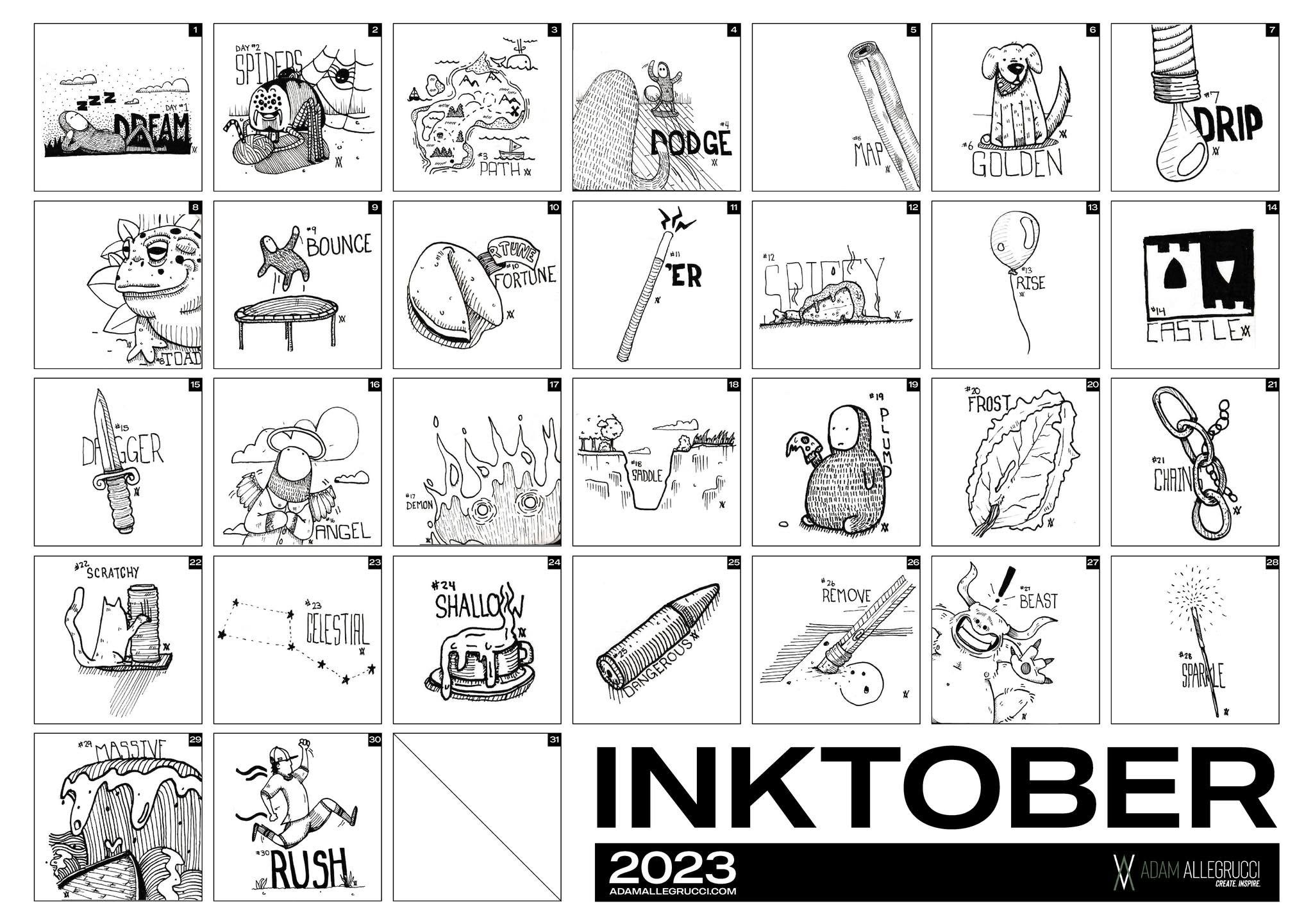
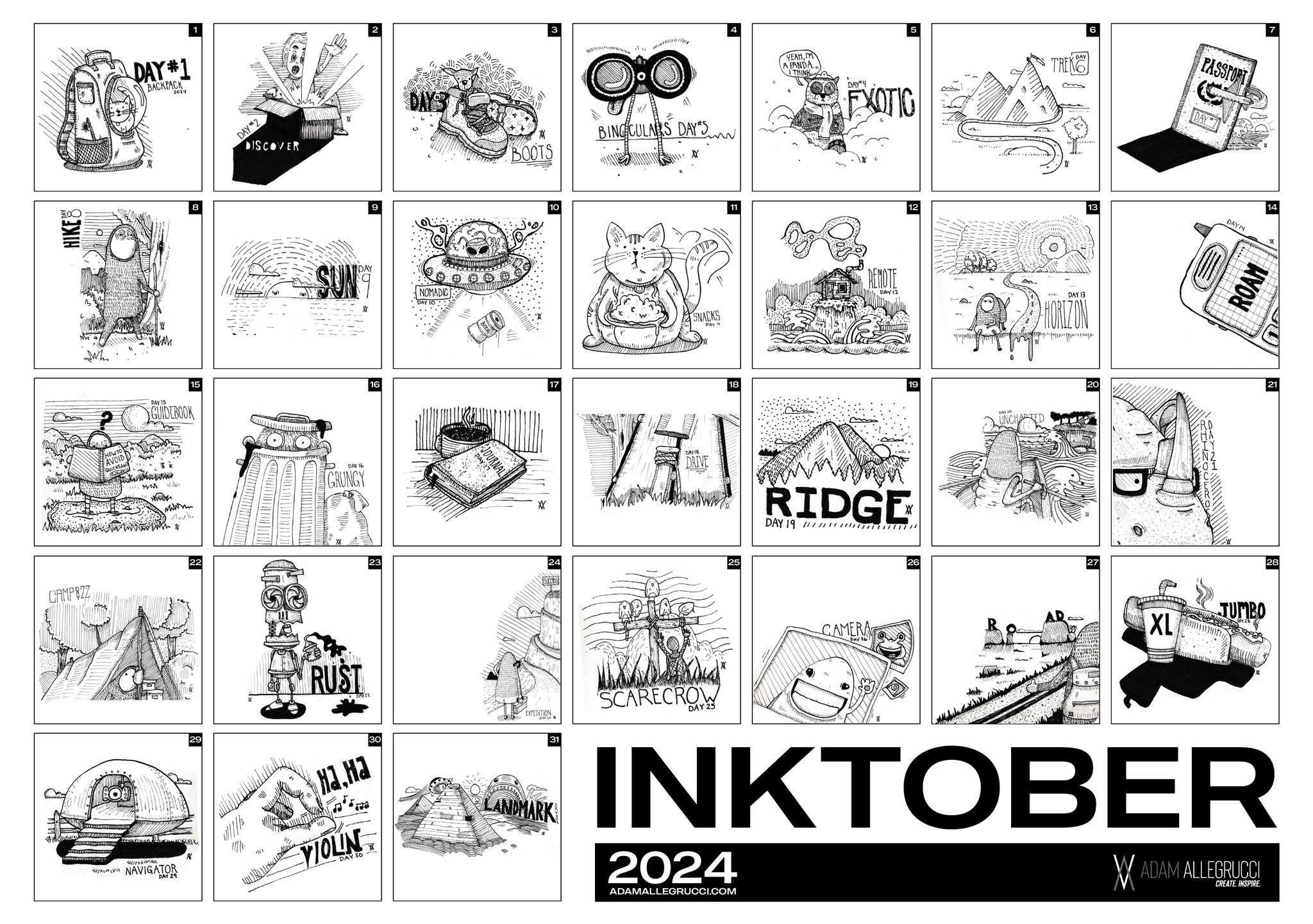
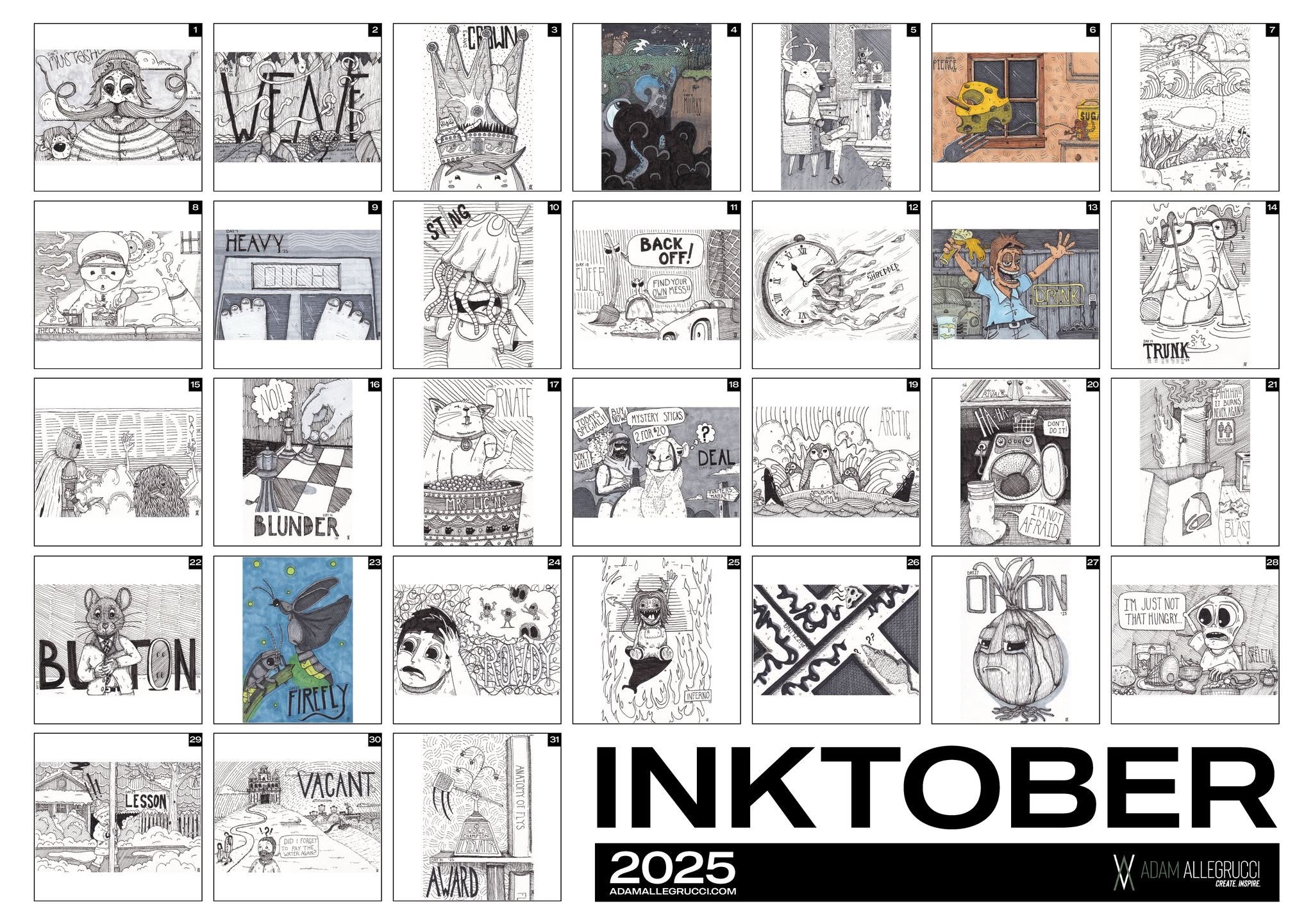
Drawing and editing use the same muscles
Illustration and post-production may use different tools, but both depend on selection. Where should the eye go first? What detail supports the idea? What can be removed? How much information can a frame hold before the message gets lost?
A small Inktober panel forces those decisions quickly. Line weight creates emphasis. Empty space creates a pause. Lettering becomes part of the composition. A reveal or visual joke depends on timing even when nothing moves. Those are the same questions I work through in editing and motion design, where every frame has to guide attention and earn its place.
The value is in returning
The six sheets do not show a straight line from rough to finished or simple to complex. Creative growth rarely works that neatly. They show recurring interests, changing approaches, unfinished spots, stronger habits, and hundreds of individual decisions made over time.
That may be the most useful lesson I can take from the collection. Consistency is not the absence of missed days. It is the decision to return after them. A long practice is built from finished work, imperfect records, experiments, and the willingness to begin again when the next prompt arrives.
You can see how those same instincts for composition, timing, clarity, and visual storytelling carry into my editing and motion-design work. My recent drawing and process posts are also available in my public LinkedIn activity.