OpenAI’s current support notice says the Sora web and app experiences were discontinued on April 26, 2026, and the Sora API will be discontinued on September 24, 2026. The company recommends exporting Sora content as soon as possible and says data associated with Sora use will eventually be permanently deleted after any final export window closes.
Those are the verified facts. The larger workflow lesson is my professional interpretation: creative work should never exist only inside the tool that helped make it. AI video platforms are moving quickly, but speed is not the same thing as permanence.
The immediate job is preservation
If you created work in Sora, the first step is simple: follow OpenAI’s official export process now. Do not wait for the API deadline or assume an old project will remain available because the finished clip already lives somewhere else.
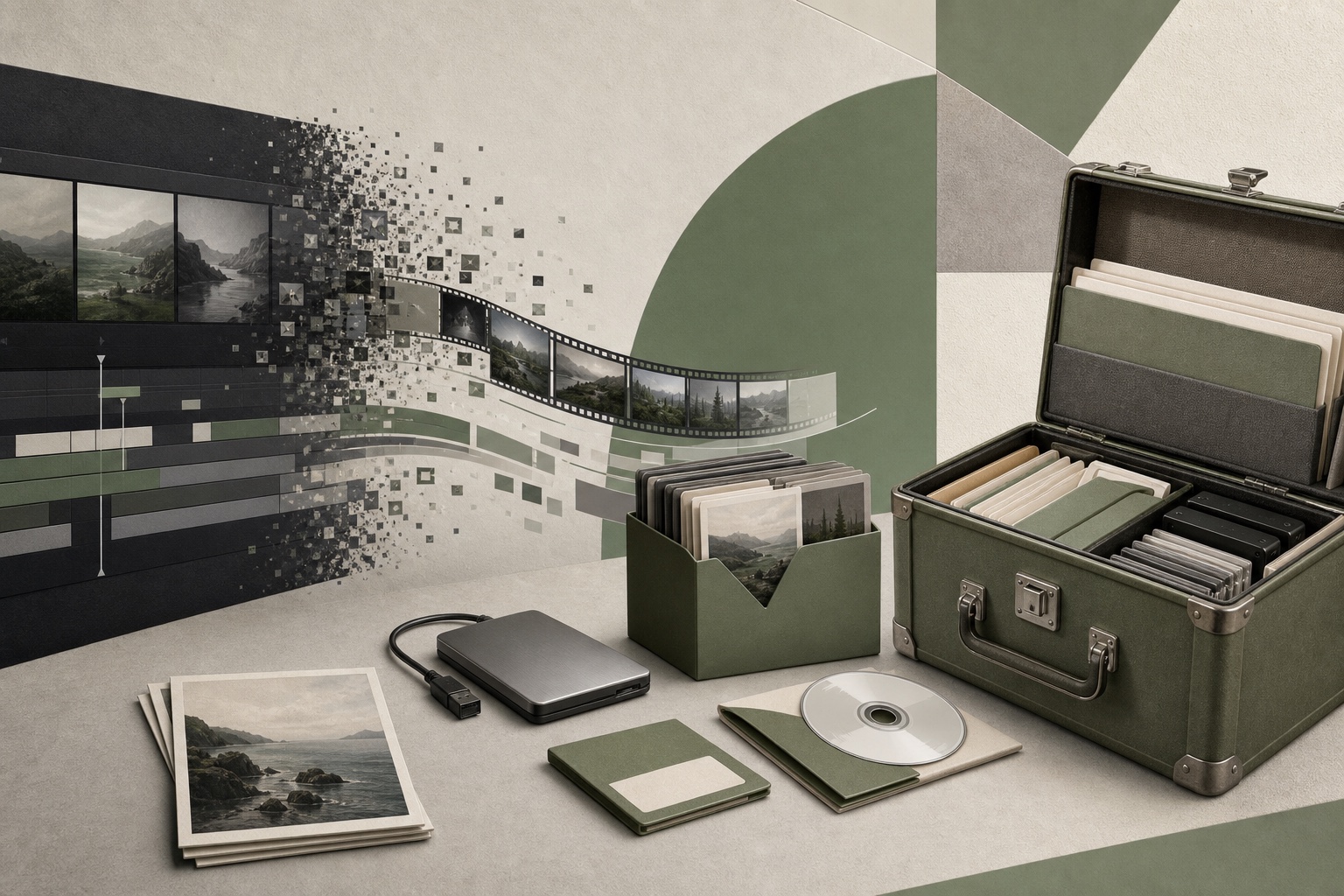
The platform export should be only one part of the archive. I would also preserve the final approved renders, useful source clips, prompts, reference images, production notes, version names, dates, and any information needed to understand how an asset was created. OpenAI’s notice does not promise what every export package will contain, so I would not treat it as a substitute for a project archive I control.
A creative asset is not truly finished until it can survive the tool that made it.
Treat generated video like source material
A generated clip may arrive quickly, but once it enters a professional edit it should be handled like any other source. Give it a descriptive filename. Store it with the project. Keep the selected version separate from abandoned tests. Record enough context that another editor, or your future self, can understand why it belongs.
That context matters because the visible clip is only part of the decision. The prompt, reference material, generation date, and intended use can explain why one result was chosen over another. You do not need to save every failed experiment forever, but you should preserve the material that supports the final creative and delivery decisions.
Separate the workflow from the interface
The most fragile AI workflow is one that depends on a platform’s private history: a thread, remix tree, saved prompt, or collection that cannot be reconstructed anywhere else. Those conveniences are useful while the product is active. They are not a durable production system.
A stronger process keeps the project logic outside the platform. The brief, script, storyboard, shot purpose, aspect ratio, duration, reference frames, approvals, and delivery requirements should live in the main project structure. The AI tool can create options, but it should not be the only place where the reasoning behind those options exists.
Build substitution points before you need them
AI video tools do not produce identical results, so “just switch models” is not a complete migration plan. Still, a clear brief makes replacement possible. If a shot is defined by its story function, framing, action, length, and visual references, it can be rebuilt or replaced. If it is defined only by a platform conversation, the project becomes harder to move.
This is also a good reason to finish generated material inside a normal post-production workflow. Editing, motion design, sound, color, titles, versions, and delivery should remain organized in tools and formats that the production team can control. The generation step is important, but it is still one step.
Keep client work explainable
For commercial work, preserve approvals and usage context alongside the media. A client should not have to guess which file was approved, what was changed in post, or which version went to a particular platform. If a tool is later discontinued, the delivery record should still make sense without access to that tool.
This does not mean every AI experiment needs a legal binder. It means the level of documentation should match the stakes. A personal concept test and a paid campaign have different requirements, but neither benefits from mystery.
The useful lesson is bigger than Sora
A product sunset does not make the experiments created with it worthless. It does change how I think creative professionals should evaluate new tools. Output quality and speed matter. So do export options, ownership of source material, repeatability, and the cost of leaving.
The best AI workflow is not the one with the most automation. It is the one that saves time without making the work dependent on a single interface. That principle applies to video generation, editing, review systems, templates, plugins, and almost every other part of post.
You can see how I carry projects through organized editing, motion design, finishing, versions, and delivery in my selected work.