
A video can be approved and still have a fair amount of work left before it's actually delivered. The creative changes might be finished, but there are still final files, different lengths, delivery requirements, and details to check before calling the whole project done.
That's a distinction I've been building into CUTTKR. Approved and Delivered are separate stages because they mean different things. One tells me the edit has sign-off. The other tells me the delivery work has been handled.
The latest update goes further with that part of the process. It lets related approved edits be reviewed together for delivery while keeping the details for each one separate.
The work after approval still needs a place
Some of the video editing work I do involves delivering several lengths of the same campaign. A 60-second spot might also need 30-second and 15-second cuts. Depending on the job, there can be different formats or versions with and without a slate.
Those files belong to the same project, but they aren't all the same deliverable. Having one cut approved doesn't tell me whether another length is ready, whether all of the required versions have been accounted for, or whether something still needs attention.
That was part of the original need for CUTTKR. I already had an organized file system. What I didn't have was one place to see the project specifics without trying to remember everything. Delivery is another part of that same problem.
A folder can hold the final files. The tracker needs to show where things stand before and after those files are ready.
Related edits, separate requirements
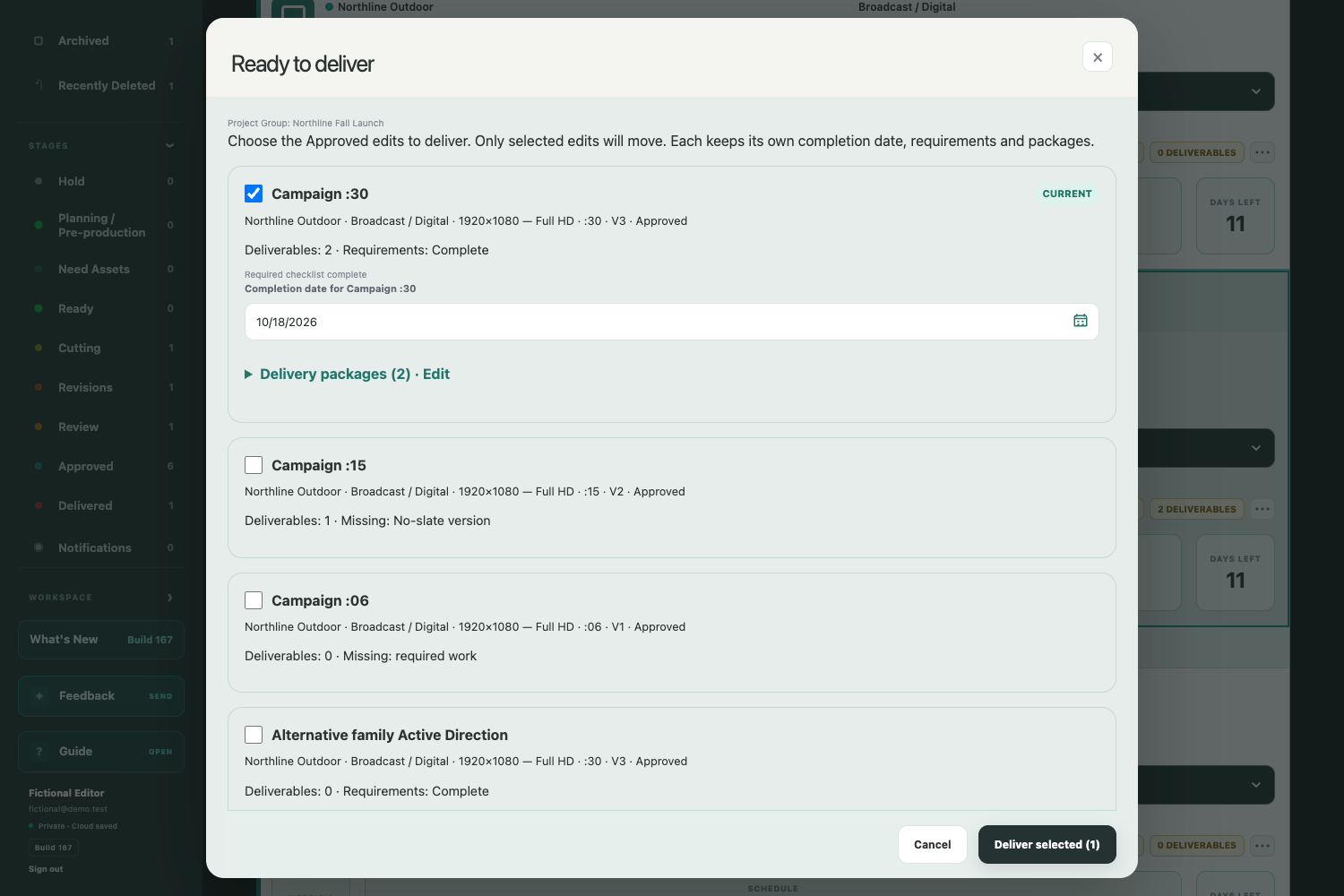
CUTTKR uses Project Groups to connect separate edits, such as different lengths or formats. In the new delivery flow, moving an approved edit toward Delivered opens a review of that edit and other eligible approved edits in its group.
Only the current edit starts selected. The others are there if they're ready too, but they don't get included automatically. An edit that's still in Review or Revisions isn't offered as though it has already been approved.
Each selected edit keeps its own completion date, delivery packages, and required-work warnings. Grouping the work makes it easier to handle together without turning everything into one shared status.
That's the important part. The 30-second cut can be ready while the 15-second cut still needs something. They should stay connected, but one shouldn't hide the other's unfinished work.
What the example shows
The screenshot above uses fictional projects, not actual client work. It shows a group with a 30-second edit, a 15-second edit, and a six-second edit, along with an active direction from another edit in that group.
The 30-second edit is selected and has its requirements complete. The 15-second edit shows a missing no-slate version. The six-second edit has required work outstanding. They all have approval, but the delivery details tell a more specific story.
That's why I don't want the group itself to be treated as one big finished item. Being able to see those differences is more useful than clearing everything at once and sorting out the exceptions later.
Delivery should be deliberate
CUTTKR lets me review and edit the saved delivery packages before marking the selected edits Delivered. It tracks those details. It doesn't render the files or send them to their destination for me.
Adding a package also doesn't mark the edit Delivered. Preparing the information and confirming the handoff are separate steps.
If required work or a required slate version is missing, the warning belongs to that edit. There is a deliberate option to proceed anyway, rather than pretending the missing item has been completed. One edit's acknowledgement doesn't clear another edit's warning.
And if saving one edit fails, the successful ones stay Delivered. The remaining drafts stay available so a retry doesn't mean starting the whole process over.
Building around the details of the job
I started CUTTKR because the project details were getting harder to keep up with during a busy editing season. Using it with real work keeps showing me more of what needs to be there.
This update is one of those smaller, specific parts. The project doesn't stop needing attention as soon as someone approves the cut. The final versions and delivery details still need to be accounted for, and I want that to be clear when I look at the work.
You can find more about what I'm building at CUTTKR.com.